



Psilocybin Mushrooms vs. LSD: Unpacking the Key Differences
Did you know that over 12% of adults in the United States have tried hallucinogenic drugs at least once in their lifetime? 1 Among these, the naturally occurring compounds found in psilocybin mushrooms and the synthetically produced lysergic acid diethylamide (LSD) stand out as two of the most iconic psychedelics. While both substances are renowned for their profound mind-altering capabilities, they possess distinct characteristics that set them apart. Understanding these differences is crucial for anyone interested in the world of psychedelics, whether for recreational, spiritual, or therapeutic purposes. Here is the perfect opportunity to learn the differences between psilocybin mushrooms and LSD in the UK.
In this article, we’ll delve deep into the fascinating world of psilocybin mushrooms and LSD. I’ll guide you through their origins, chemical structures, onset times, duration of effects, subjective experiences, and potential therapeutic applications. By the end, you’ll have a clearer picture of what makes these two powerful substances unique.
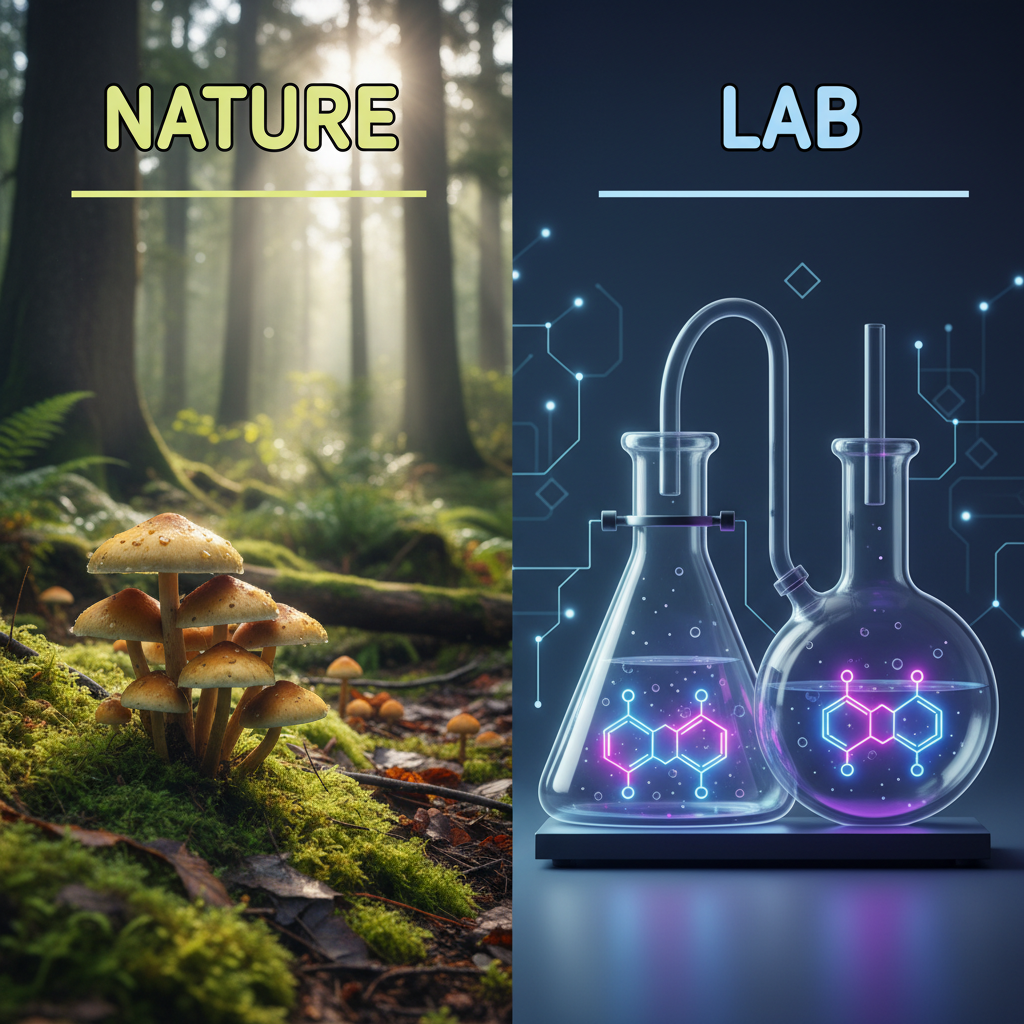
The Origins and Chemistry: Nature vs. Lab
One of the most fundamental distinctions between psilocybin mushrooms and LSD lies in their origins and chemical makeup.
Psilocybin Mushrooms: Gifts from the Earth
Psilocybin mushrooms, often referred to as “magic mushrooms” or “shrooms,” are fungi that contain the psychoactive compounds psilocybin and psilocin. These compounds are naturally produced by over 200 species of mushrooms found across the globe, thriving in diverse environments from forests to pastures. For millennia, indigenous cultures have utilized these mushrooms in spiritual ceremonies and for their perceived healing properties. 2 When ingested, the psilocybin in the mushroom is converted by the body into psilocin, the primary psychoactive agent. This natural origin contributes to a certain earthy, organic feel often associated with the psilocybin experience.
LSD: A Laboratory Creation
Lysergic acid diethylamide (LSD), on the other hand, is a potent synthetic psychedelic. It was first synthesized in 1938 by Swiss chemist Albert Hofmann while he was researching potential medicinal uses for ergot alkaloids, compounds derived from a fungus that infects rye. 3 Hofmann accidentally discovered LSD’s mind-altering properties five years later when he ingested a small dose. Unlike psilocybin, LSD is not found in nature; it is a product of human ingenuity and chemical synthesis. Its molecular structure is significantly different from psilocybin, leading to distinct interactions with the brain’s neurotransmitter systems.
Onset, Duration, and Dosage: A Tale of Two Timelines
When you decide to explore the effects of these substances, the timing and duration are important considerations. Here’s how psilocybin mushrooms and LSD differ in these aspects.
Psilocybin Mushroom Timelines
When you consume psilocybin mushrooms, you can typically expect the effects to begin within 20 to 60 minutes, depending on whether you eat them on an empty stomach and the preparation method. The peak of the experience usually occurs between 1 to 2 hours after ingestion, and the entire journey can last anywhere from 4 to 6 hours. 4 Dosage is highly variable, as the potency of psilocybin mushrooms can differ significantly between species and even between individual mushrooms. A common recreational dose might range from 1 to 3 grams of dried mushrooms, though this can vary widely.
LSD Timelines
LSD typically has a slower onset compared to psilocybin mushrooms. You might start feeling the effects 30 to 90 minutes after ingestion, and sometimes even longer. The peak effects often manifest 2 to 5 hours into the experience, and the entire duration can be substantially longer, often ranging from 8 to 12 hours, and sometimes even up to 24 hours. 5 This prolonged duration is a significant difference and requires a greater commitment of time and mental preparation. LSD is usually measured in micrograms (µg), and a common recreational dose is between 50 to 150 µg. Psilocybin mushrooms vs LSD!
The Subjective Experience: Visuals, Thoughts, and Emotions
While both psilocybin mushrooms and LSD can induce profound psychedelic experiences, the quality of these experiences often differs. Many users report distinct characteristics associated with each substance.
The Mushroom Mindset
Experiences with psilocybin mushrooms are often described as more organic, introspective, and emotionally resonant. Users frequently report a sense of connection to nature, heightened empathy, and profound insights into their own lives and the universe. Visuals tend to be more flowing, geometric, and sometimes accompanied by a sense of childlike wonder. The emotional landscape can be more varied, ranging from euphoria and deep peace to occasional anxiety or introspection. Because psilocybin is converted to psilocin in the body, the experience can feel more “grounded” and less intensely stimulating than LSD for some individuals.
The LSD Journey
LSD is often characterized by its intense mental stimulation, heightened sensory perception, and often more vivid and complex visual hallucinations. Users might experience a radical shift in their perception of reality, with thoughts racing and a profound sense of interconnectedness. Some describe the experience as more “electric” or “cosmic” than that of psilocybin. The visual effects can be incredibly intricate, with patterns, colors, and transformations appearing everywhere. However, the prolonged duration can sometimes lead to mental fatigue or a feeling of being overwhelmed, especially for inexperienced users. 6 It is crucial to remember that set and setting play a monumental role in shaping the psychedelic experience, regardless of the substance.
Neurochemical Interactions: How They Affect the Brain
Both psilocybin and LSD primarily interact with the serotonin system in the brain, particularly the 5-HT2A receptor. However, their specific mechanisms and the extent of their interactions lead to different outcomes.
Psilocybin’s Serotonergic Dance
When psilocybin is ingested, it’s dephosphorylated into psilocin, which then acts as a partial agonist at serotonin receptors, especially the 5-HT2A receptor. This interaction is believed to be the primary driver of its psychedelic effects. 7 Psilocin also interacts with other serotonin receptor subtypes, contributing to the complex cascade of neurochemical changes that result in altered consciousness, mood, and perception. The “natural” origin of psilocybin might also mean it interacts with the body’s systems in a way that feels more integrated for some.
LSD’s Complex Receptor Binding
LSD also binds to serotonin receptors, including the 5-HT2A receptor, but it exhibits a more complex binding profile. It acts as an agonist at a wider range of serotonin receptors and also interacts with dopamine and adrenergic receptors. 8 This broader interaction is thought to contribute to LSD’s intense stimulation, its longer duration, and its unique subjective effects. The chemical structure of LSD allows it to remain bound to the 5-HT2A receptor for an extended period, which is a key factor in its prolonged effects. For instance, the University of Copenhagen has conducted significant research into LSD’s receptor binding profile. 9
Potential Therapeutic Applications: A Growing Field of Research
Both psilocybin and LSD are at the forefront of psychedelic-assisted therapy research, showing immense promise for treating various mental health conditions.
Psilocybin for Depression and Anxiety
Psilocybin has garnered significant attention for its potential to treat conditions like depression, anxiety, and PTSD. Clinical trials have demonstrated that psilocybin, when administered in a controlled therapeutic setting with psychological support, can lead to rapid and sustained reductions in symptoms. 10 For example, studies at Johns Hopkins University have shown remarkable results in patients with treatment-resistant depression. 11 The compound’s ability to facilitate profound emotional release and shift cognitive patterns is a key aspect of its therapeutic potential. Furthermore, research into the use of psilocybin for end-of-life distress in cancer patients has also shown promising outcomes, offering comfort and a new perspective. 12
LSD in Psychiatry
LSD has also been explored for its therapeutic benefits, particularly in the context of anxiety, addiction, and potentially even cluster headaches. Early research in the mid-20th century showed promise, but the substance’s prohibition halted further investigation for decades. 13 More recently, renewed interest has led to studies exploring LSD’s potential to enhance psychotherapy and treat conditions like alcohol dependence. The prolonged nature of the LSD experience might offer a more extended window for therapeutic processing, although this also presents challenges in terms of administration and integration. Organizations like the Beckley Foundation are actively involved in LSD research. 14
Safety and Risks: Responsible Exploration
While both substances can offer incredible experiences, it’s vital to approach them with respect and awareness of potential risks.
Considerations for Psilocybin Mushrooms
When consuming psilocybin mushrooms, the primary risks involve psychological distress. Anxiety, paranoia, and challenging emotional states can arise, especially in unprepared individuals or in overwhelming settings. Furthermore, there’s a risk of misidentification if foraging for wild mushrooms, which can lead to poisoning from toxic species. 15 It is always recommended to source psilocybin from reputable suppliers or cultivators to ensure accurate identification and potency. For those seeking a natural psychedelic experience, our collection of psilocybin mushroom products at Magic Bites offers a safe and reliable option.
Considerations for LSD
LSD carries similar risks of psychological distress, including the potential for “bad trips” characterized by intense fear and confusion. Due to its potency and long duration, LSD can be particularly disorienting. There’s also a theoretical risk of triggering latent mental health conditions in predisposed individuals. 16 The purity and dosage of street-obtained LSD can be highly variable, making it difficult to ascertain what one is actually consuming. Therefore, responsible use, thorough research, and a cautious approach are paramount for both substances.
Key Takeaways: Psilocybin Mushrooms vs. LSD at a Glance
- Origin: Psilocybin mushrooms are natural fungi; LSD is a synthetic compound.
- Active Compounds: Psilocybin mushrooms contain psilocybin and psilocin; LSD is lysergic acid diethylamide.
- Onset: Psilocybin mushrooms typically have a faster onset (20-60 minutes) than LSD (30-90 minutes).
- Duration: Psilocybin mushroom experiences generally last 4-6 hours, while LSD trips can last 8-12 hours or more.
- Subjective Experience: Psilocybin is often described as more organic, emotional, and introspective; LSD is often characterized as more mentally stimulating, visually intense, and cosmic.
- Therapeutic Potential: Both show promise for mental health, with psilocybin studied for depression/anxiety and LSD for addiction/anxiety.
- Risks: Both carry risks of psychological distress; misidentification is a risk with wild mushrooms; dosage variability is a concern with street-sourced LSD.
Conclusion: Two Paths to Altered Consciousness
Psilocybin mushrooms and LSD, while both powerful psychedelics, offer distinct journeys into altered states of consciousness. Their differences in origin, chemical structure, onset, duration, and subjective experience create unique landscapes for exploration. Whether you are drawn to the earthy embrace of magic mushrooms or the electric intensity of LSD, understanding these nuances is key to a safe, intentional, and potentially transformative experience. As research continues to unveil the therapeutic potential of these compounds, responsible education and cautious exploration remain paramount for anyone venturing into this fascinating realm.
Frequently Asked Questions (FAQ)
Q1: Are psilocybin mushrooms and LSD chemically similar?
A1: No, while both interact with serotonin receptors, their chemical structures are quite different. Psilocybin mushrooms contain naturally occurring psilocybin and psilocin, whereas LSD is a synthetic compound created in a lab.
Q2: Which substance has a longer-lasting effect, psilocybin mushrooms or LSD?
A2: LSD generally has a significantly longer duration of effects, typically lasting 8-12 hours, compared to psilocybin mushrooms, which usually last 4-6 hours.
Q3: Is one substance considered “stronger” than the other?
A3: It’s not a matter of one being definitively “stronger” in a linear sense, but rather their potency and effects manifest differently. LSD is typically dosed in micrograms and is known for its intense mental stimulation and prolonged duration, while psilocybin is dosed in milligrams and often described as more emotionally grounded and introspective.
Read our article on understanding liberty caps for sale in UK.
Q4: Can psilocybin mushrooms or LSD be safely used for therapeutic purposes?
A4: Research indicates significant therapeutic potential for both substances when used in controlled clinical settings with professional guidance and psychological support. They are being studied for conditions like depression, anxiety, PTSD, and addiction. However, self-medication is not recommended due to potential risks.
Q5: What are the main risks associated with using psilocybin mushrooms and LSD?
A5: The primary risks for both substances involve psychological distress, such as anxiety, paranoia, and challenging emotional experiences. For psilocybin mushrooms, misidentification of wild species is a critical safety concern. For LSD, the long duration can be overwhelming, and the dosage of street-obtained substances can be unreliable.
Q6: Where can I find reliable information or products related to psilocybin mushrooms?
A6: For reliable information and a curated selection of psilocybin mushroom products, reputable online dispensaries and educational resources specializing in psychedelics are good starting points. For example, Magic Bites offers a range of psilocybin mushroom products. Buy Lions Mane mushrooms for sale online in the UK.
Footnotes
- National Institute on Drug Abuse. (2023, March 21). Hallucinogens and Dissociative Drugs. Retrieved from https://www.drugabuse.gov/publications/research-reports/hallucinogens-dissociative-drugs/ ↩
- Stamets, P. (2005). Mycelium Running: How Mushrooms Can Help Save the World. Ten Speed Press. ↩
- Hofmann, A. (1980). LSD: My Problem Child. McGraw-Hill. ↩
- Johnson, M. W., et al. (2017). Past, present and future of psilocybin research. Current Pharmaceutical Design, 23(32), 4986-4995. ↩
- Shulgin, A. T., & Shulgin, A. (1997). PiHKAL: A Continuation. Transform Press. ↩
- Leary, T., & Alpert, R. (1963). The Harvard Psilocybin Project. University Books. ↩
- Vollenweider, F. X., & Kometer, N. (2013). The neurobiology of psychedelic drugs. Nature Reviews Neuroscience, 11(9), 642-651. ↩
- Nichols, D. E. (2004). Psychedelics. Pharmacological Reviews, 57(1), 157-181. ↩
- https://news.ku.dk/all_news/2020/06/lsd-binds-to-serotonin-receptors-in-a-unique-way/ ↩
- Carhart-Harris, R. L., et al. (2016). Psilocybin with psychological support versus placebo versus standard care for treatment-resistant depression: a protocol for a randomised double-blind trial (IMPSATS). BMJ Open, 6(4), e011175. ↩
- Griffiths, R. R., et al. (2016). Psilocybin produces substantial and enduring reductions in anxiety and depression in patients with life-threatening cancer. Journal of Psychopharmacology, 30(12), 1181-1197. ↩
- Ross, S., et al. (2016). Rapid and sustained symptom reduction from psilocybin treatment for anxiety and depression in patients with life-threatening cancer: a randomized controlled trial. Journal of Psychopharmacology, 30(12), 1165-1180. ↩
- Dyck, E. (2008). Psychedelic psychiatry: LSD on the psychiatric frontier. Johns Hopkins University Press. ↩
- https://www.beckleyfoundation.org/research/lsd-research/ ↩
- Benjamin, D. R. (1995). Mushrooms: Poisons and Hallucinogens. W. H. Freeman. ↩
- Richards, W. A. (2016). Sacred Knowledge: Discovering the Evolving Consciousness of Humanity. Columbia University Press. ↩